
 SLOTS.US Editorial

Sweepstakes are legal promotional contests that avoid being classified as gambling by removing one of gambling’s three elements — consideration — through a free “no purchase necessary” entry method (AMOE). That single distinction is the legal backbone of US sweepstakes casinos. This is general information, not legal advice; laws vary by state and change.
Gambling vs Sweepstakes: The Three Elements
US law generally defines gambling by three elements that must all be present:
- Prize — something of value to win.
- Chance — outcome determined mainly by luck.
- Consideration — something of value you must give to enter (money, a purchase).
Remove any one element and it isn’t gambling. Sweepstakes legally remove consideration by offering a genuinely free way to enter with equal chances of winning.
| Element | Present in a legal sweepstakes? |
|---|---|
| Prize | Yes |
| Chance | Yes |
| Consideration | No (“no purchase necessary”) |
The Sweepstakes Casino Model: Two Currencies
Sweepstakes casinos use a dual-currency system to stay compliant:
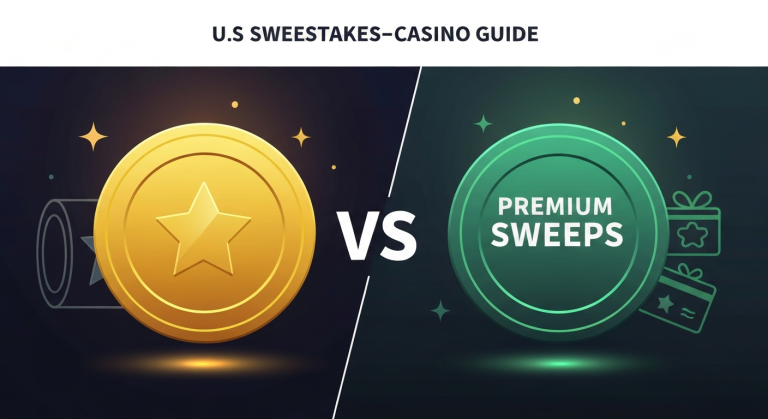
- Gold Coins (GC): bought (or given) for entertainment only — no cash value, never redeemable.
- Sweeps Coins (SC): always given for free (as a bonus with GC purchases, daily logins, or mail-in requests) and redeemable for cash or gift cards.
The key point: the redeemable currency (SC) is never sold directly. That preserves “no purchase necessary.” For a full breakdown, see gold coins vs sweeps coins explained.
Why “No Purchase Necessary” and AMOE Matter
- No Purchase Necessary (NPN): a mandatory disclosure meaning you never have to pay to enter or win. If the only way to get SC were buying GC, that would be consideration — illegal gambling.
- Alternative Method of Entry (AMOE): the free route that makes NPN real — usually a mail-in request — offering the same chance to win as any paid path.
These aren’t formalities; they’re strictly enforced. Operators without a clear, equivalent AMOE risk serious penalties.
Federal and State Framework
There’s no single federal sweepstakes statute, but the FTC (deceptive practices), FCC (broadcast promotions), and postal rules (mail fraud) all apply. Sweepstakes differ from lotteries — lotteries include consideration and are generally government-run or specifically authorized.
State law varies widely. Some states restrict or effectively ban sweepstakes casinos; Washington is notably restrictive, and other states have specific carve-outs or requirements. Because the landscape shifts, always check your own state’s rules and the operator’s official rules — our guide to what states allow sweepstakes casinos is a useful starting point.
Official Rules and Consumer Protections
Every legitimate sweepstakes must publish Official Rules — a binding contract that typically includes:
- Eligibility (age, residency, “void where prohibited”).
- Odds disclosure (or that odds depend on entries received).
- A clear “no purchase necessary” statement and how to enter free.
- Prize details and redemption terms.
- Start/end dates and dispute resolution.
This transparency, plus federal and state oversight, is what protects players.
Sweepstakes vs Social vs Real-Money Casinos
- Real-money online casinos: you wager real cash for real cash — legal only in specific regulated states (consideration is present).
- Social casinos: free-to-play for fun; virtual currency with no redeemable value (no prize).
- Sweepstakes casinos: the hybrid — free-play with GC plus redeemable SC obtained free, removing consideration and allowing operation in many states. See sweepstakes casino vs real-money casino for a side-by-side.
Frequently Asked Questions
Are sweepstakes casinos legal in the US?
In many states, yes — by removing consideration through free, equal-chance entry (AMOE). But legality varies by state, and some (like Washington) restrict them. Check your state and the operator’s rules.
Can I win real money at a social casino?
Generally no. Pure social casinos offer no redeemable prizes. If a platform lets you redeem cash or gift cards, it’s operating as a sweepstakes casino under sweepstakes rules.
What is an AMOE and why does it matter?
An Alternative Method of Entry (usually mail-in) lets you obtain Sweeps Coins for free with equal winning chances. It’s what satisfies “no purchase necessary” and keeps the model legal.
Why are some states restricted?
States set their own gambling definitions and consumer-protection laws. Some have stricter interpretations or specific statutes, so operators exclude them via “void where prohibited.”
Bottom line: Sweepstakes casinos are legal in most states because free, equal-chance entry removes the “consideration” that defines gambling — but always read the official rules and confirm your state allows play. 18+.